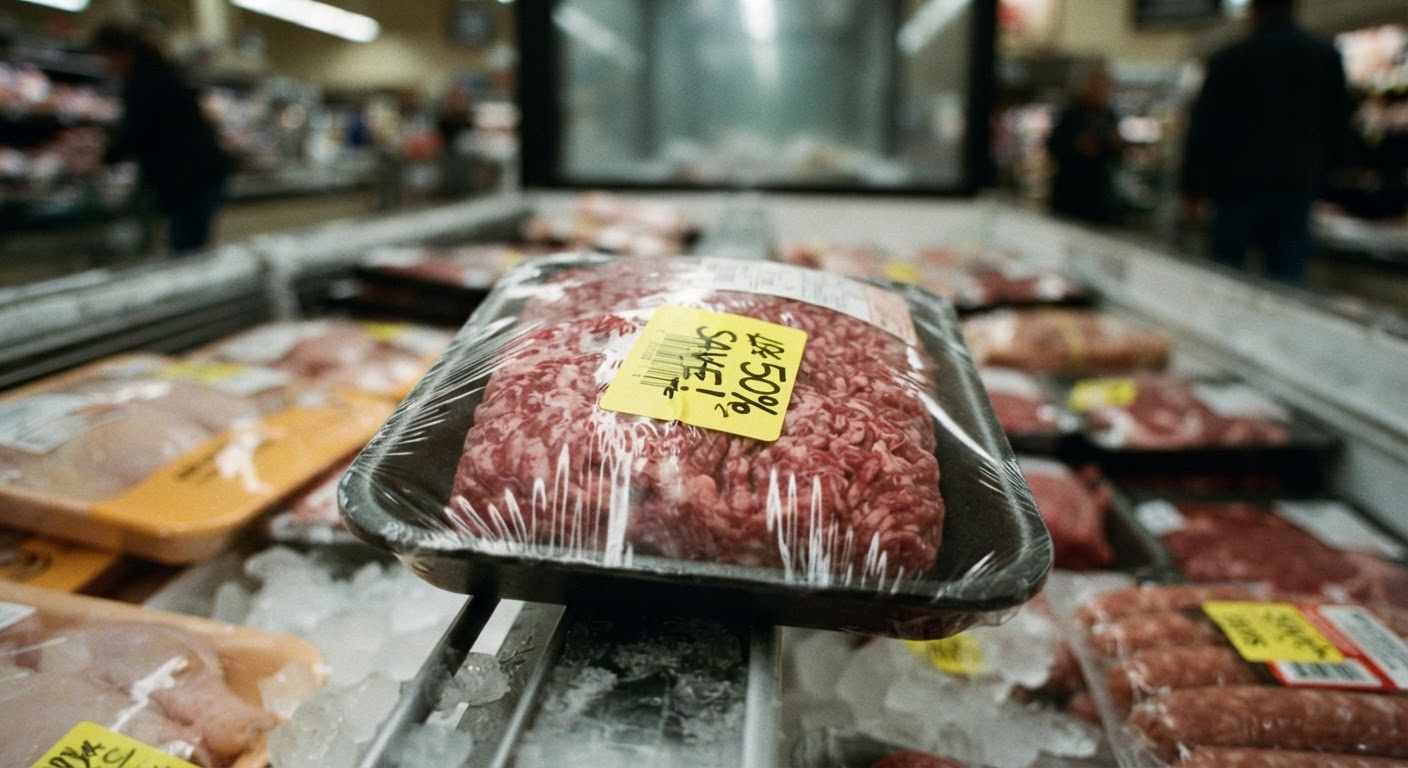
Why stores mark items down and how to spot the pattern at your local store
Grocery stores lose money on food that doesn’t sell before it goes bad, so they’d rather sell it cheap than throw it away. That’s the whole secret behind markdowns. A store would much rather get a few dollars for a pack of chicken thighs today than pay to dump it in the trash tomorrow. Once you understand that logic, the whole markdown system stops feeling random and starts feeling like something you can actually predict.
Every department has its own rhythm. Meat and seafood get marked down as they approach their sell-by date, which staff usually check first thing in the morning. Bakery items get discounted at the end of the day so the shelves are clear for the next morning’s fresh batch. Produce gets marked down when it starts to bruise, soften, or just look a little tired, which often happens in the afternoon after a day of people picking through the bins. Dairy follows a similar pattern to meat, tied closely to the printed date on the package.
The best way to learn your specific store’s pattern is to just pay attention for a couple of weeks. Walk past the meat case, the bakery rack, and the produce discount cart every time you’re in the store, even if you’re not buying anything that day. Note what’s marked down and when. Most stores use a colored sticker or a handwritten tag for markdowns, and many use a separate small cart or shelf tucked into a corner of the department rather than mixing it in with full-price items. Once you find that cart, you’ve found the heart of the whole operation.
It also helps to talk to the people working in those departments. Butchers, bakery staff, and produce clerks almost always know their own store’s schedule better than any app or article ever could, and most are happy to tell you if you ask a simple, friendly question like “what time do you usually mark stuff down back here?” Store policies vary, so this is really the only reliable way to get an answer specific to your location.
The best times of day and days of the week to check markdown carts
While every store is different, there are some general patterns that hold true often enough to be worth building your shopping trips around.
Meat departments tend to do their markdowns in the morning, since that’s when staff review dates and restock the case for the day. If you can swing an early shopping trip, especially midweek, you’re more likely to catch fresh markdowns before other shoppers have picked through them. Bakery markdowns usually happen closer to closing time, when the day’s unsold bread, rolls, and pastries get pulled and discounted rather than left out overnight. Produce is the least predictable of the three, but afternoons are generally a safer bet than first thing in the morning, since that’s when the day’s browsing and handling has taken its toll on the more delicate items.
As for days of the week, many stores get major deliveries early in the week, which means the days right before a new shipment — often late in the week or over the weekend — are when older stock gets cleared to make room. That’s not a hard rule everywhere, but it’s a pattern worth testing at your own store. Some households find that a quick Thursday or Friday check of the meat case, paired with a weekend produce cart check, covers most of what they need without requiring extra trips.
The honest answer is that there’s no substitute for a little trial and error. Pick two or three times during the week that already fit into your routine — dropping off or picking up kids, running errands, whatever it is — and check the markdown areas each time. Within a few weeks you’ll have a personal map of when your store tends to discount things, and you can build your shopping list around it instead of the other way around.
How to freeze or repurpose markdown meat and produce before it turns
The reason markdown shopping saves money instead of just delaying a trip to the trash can is proper handling once you get the food home. A good deal on meat that spoils before you cook it isn’t a deal at all, so this step matters as much as finding the discount in the first place.
For meat, the rule of thumb is simple: if you’re not cooking it within a day or two of the sell-by date, freeze it the same day you buy it. Repackage it if needed — pressing out excess air and wrapping tightly, or using a vacuum sealer if you have one, will noticeably cut down on freezer burn and keep the texture better when you thaw it later. It also helps to portion meat into meal-sized amounts before freezing, so you’re not stuck thawing a whole family pack when you only need enough for one dinner. A permanent marker and some masking tape for labeling the date and cut of meat will save you a lot of guessing later.
Produce is trickier because freezing changes texture, so it works better for some items than others. Berries, sliced peppers, chopped onions, shredded zucchini, and most leafy greens freeze reasonably well and are great to have on hand for smoothies, soups, and stir-fries. Softer fruits like bananas are perfect for freezing once they’re overripe — just peel and freeze them for baking or blending later. Items like lettuce or cucumbers don’t freeze well at all, so those are better handled by using them within a day or two, or by turning them into something like a quick pickle or slaw that extends their usable life a bit longer.
Bread and baked goods are some of the easiest markdown items to work with because they freeze beautifully. Sliced bread can go straight into the freezer and be pulled out slice by slice as needed. Bagels, rolls, and even day-old pastries hold up well too. If you know you won’t get through a markdown loaf in a few days, slicing and freezing it the day you bring it home is a small step that prevents almost all waste.
Building a flexible meal plan around what’s discounted that week
The households that get the most out of markdown shopping tend to flip the usual meal-planning process on its head. Instead of writing a menu first and then shopping for it, they shop the markdown carts first and build the week’s meals around whatever shows up.
This works best with a loose framework rather than a rigid plan. Think in terms of categories instead of specific recipes: one night built around discounted meat, one built around a big pot of something that uses marked-down produce, one that leans on the freezer stash from a previous week’s markdown haul. Having a few reliable “formula” meals in your back pocket — a stir-fry, a soup, a sheet-pan dinner, a big pasta bake — gives you a place to plug in whatever protein or vegetable happens to be cheap that week without having to reinvent your whole plan every time.
It also helps to keep a running list of pantry staples that pair well with almost anything: rice, pasta, canned tomatoes, broth, onions, garlic, and a few basic spices. When those staples are already on hand, a markdown find becomes half a meal instead of a whole shopping trip. This is where the savings really start to add up, because you’re not just getting a discount on one item, you’re avoiding a second, full-price trip to fill in the rest of the meal.
Some families find it useful to do their main planning after the markdown trip rather than before it. You do your walk-through of the discount carts, take stock of what you found, and then spend fifteen minutes that evening figuring out how those items fit into the week. It takes a bit of a mindset shift if you’re used to planning meals first, but once it clicks, it tends to feel less like extra work and more like a treasure hunt with a practical payoff.
Mistakes that turn “good deal” into wasted food
Markdown shopping only saves money if the food actually gets eaten, so it’s worth being honest about the ways a good deal can quietly turn into waste.
The most common mistake is buying based on the discount alone rather than an actual plan for using the item. A big markdown on a family pack of pork chops isn’t a deal if it sits in the fridge for a week because there was no real plan to cook it. Before something goes in the cart, it helps to ask a quick question: what meal is this for, and when will I actually make it? If there’s no answer, it’s worth reconsidering, no matter how good the discount looks.
Another common trap is overbuying simply because the price is low. A markdown cart full of ripe tomatoes can be exciting, but if your household can’t realistically eat, cook, or freeze all of them before they turn, the extra volume just becomes extra waste. It’s usually smarter to buy an amount that matches what you can actually use, even if that means leaving some of a good deal behind for someone else.
Skipping the “cook or freeze today” step is another frequent slip-up, especially on busy days when a markdown item gets tossed in the fridge with good intentions and then forgotten. Building a small habit — even just a sticky note on the fridge listing what needs to be used or frozen that day — can catch a lot of food before it crosses over from bargain to loss.
Finally, it’s easy to underestimate how quickly discounted produce and meat move past their prime once they’re already a little further along than fresh stock. These items don’t have the same buffer that full-price groceries do, so the margin for procrastination is smaller. Treating markdown finds as first-in-line for your next meal, rather than saving them for “whenever,” is the simplest way to make sure the discount you found at the store actually turns into savings on your table.