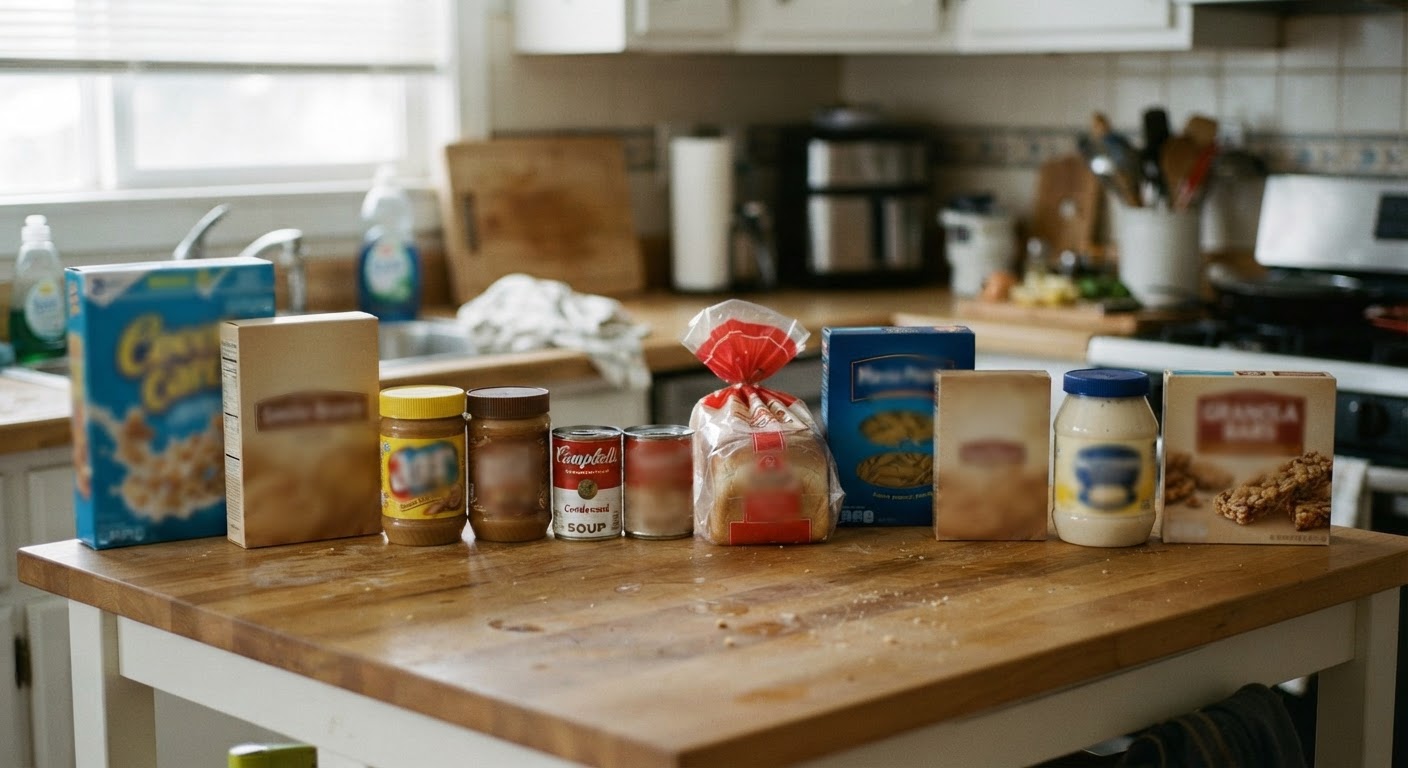
Why generic swaps save more on some items than others
Here’s the thing nobody tells you at the start of a grocery budget overhaul: not all store brands are created equal, and neither are the products they’re trying to replace. Some categories are basically the same product in a different box, made in the same factories, sometimes on the same production line, just before or after the name-brand run. Other categories are genuinely different formulas, and no amount of wishful thinking will make the store version taste like the original.
Dairy is usually your safest bet. Milk, butter, shredded cheese, sour cream, and plain yogurt are heavily regulated commodities with narrow room for variation. A gallon of milk is a gallon of milk, whichever label is on it. The same goes for canned goods like beans, tomatoes, and corn, where the product is picked, canned, and shipped with very little brand-specific processing involved. Spices are another quiet win. Cinnamon is cinnamon. Paprika is paprika. You’re paying for a name and a fancier jar, not a better ingredient.
Where it gets trickier is anything with a proprietary flavor profile that a company spent years dialing in: cereal, snack crackers, sodas, and packaged sweets. These often have specific ratios of sugar, salt, and flavoring agents that the original brand owns and won’t share. The store brand chemist is guessing at a recipe, not copying one, and you can usually tell. That doesn’t mean every snack swap fails, but it does mean your hit rate will be lower in that aisle than it is in the dairy or canned goods aisle.
Knowing this ahead of time changes how you shop. Instead of treating every generic label as an equal gamble, you can walk in expecting easy wins in some categories and reserving your skepticism for others. That’s a much less frustrating way to shop than swapping everything at once and getting burned on the one product your kid actually notices.
A simple side-by-side taste test method you can do with your family over one shopping trip
You don’t need a spreadsheet or a blind panel to figure out what’s worth switching. You need one shopping trip, a little patience, and a willingness to let your family be honest with you, even when the honest answer is “no, that’s worse.”
Start by picking three to five items your household buys regularly, ones where you already have a store-brand alternative sitting on the same shelf. Buy both versions. Don’t tell anyone which is which until after they’ve tasted it, because expectation changes perception more than people realize. If your kids know it’s the “cheap” one, they’ll often decide it’s worse before it even hits their tongue.
At home, portion out small samples of each version side by side. Label them A and B on sticky notes on the counter, not on the food itself, and keep your own notes on which letter is which so you don’t lose track. Have everyone rate each sample on a simple scale: love it, fine, or no thanks. You’re not looking for gourmet critique here, just a gut reaction.
Do this over the course of a normal shopping trip rather than treating it like a special event. Test the pasta sauce the night you were already making pasta. Test the shredded cheese on the taco night you already had planned. This keeps the test low-effort and means you’re not wasting food or money on a test-only meal that nobody eats.
Write the results down somewhere you’ll actually see them again, whether that’s a note on your phone or a sheet stuck to the inside of a cabinet door. The whole point of this exercise is to stop guessing in the aisle every single week. A five-minute taste test now saves you standing in front of the shelf next month trying to remember if the generic ranch was the good one or the sad one.
A few tips to keep the test fair
Test one item at a time rather than overhauling your whole cart in one trip. If you swap ten things at once and something tastes off in a recipe, you won’t know which ingredient caused it. Also try to test items in the way you’d normally eat them. A generic chip might taste different eaten plain versus dipped in salsa, and a cheaper coffee might taste fine black but rough with cream. Test in context, not in a vacuum.
Tracking the price-per-unit gap so you know your real savings, not just the sticker price
This is the part most people skip, and it’s the part that actually determines whether a swap is worth doing. A lower price tag doesn’t automatically mean a lower cost per use. Package sizes are inconsistent across brands on purpose, and a store brand that looks cheaper on the shelf sticker can quietly be a worse deal once you account for how much is actually in the container.
Most stores print a price-per-unit number on the shelf tag itself, usually in smaller text below the total price, listed as price per ounce, per pound, or per count. This is the number that actually matters, not the big price in bold. Get in the habit of glancing at that smaller number every time you’re comparing two versions of the same product.
Do this math for the items you’re testing, and write both numbers down next to your taste-test notes. You want to see the full picture: this item saved us this much per ounce, and the family rated it “fine” or “love it.” That combination tells you whether a swap is genuinely worth keeping in rotation, or whether it’s a marginal saving attached to a product nobody actually enjoys eating.
Sometimes the math surprises you. A generic brand priced a dollar cheaper on the shelf might come in a smaller package, making it more expensive per ounce than the name brand you were trying to replace. Other times a store brand that looks only slightly cheaper turns out to save quite a bit once you account for a bigger bag or block. You won’t know which is which until you actually check, and checking takes about ten seconds per item once you know where to look.
Over a few months, this habit adds up to something useful: a real sense of which categories are worth your attention and which aren’t. If a swap only saves a few cents per unit after you do the math, it might not be worth disrupting a food your family already likes. If it saves a meaningful amount and nobody notices a difference, that’s exactly the kind of swap you want to lock in and stop thinking about.
Categories where brand loyalty is worth keeping and why
Not every swap is worth the friction it creates, even when the taste test technically comes back fine. There are a few categories where sticking with the name brand tends to be the better call for reasons beyond flavor.
Anything tied to a specific recipe outcome is worth thinking twice about. Baking staples like flour, baking powder, and yeast behave differently across brands in ways that only show up after the fact, in a cake that didn’t rise right or bread that came out dense. If baking is a regular part of your routine, it’s often worth keeping the brand you already know works rather than troubleshooting a failed batch to save a small amount on the flour.
Products your kids are sensitive to texture or smell on are another category to be careful with. Some kids will eat a generic cracker without blinking and refuse a generic version of their favorite cereal because the texture is slightly different. This isn’t pickiness for the sake of it, it’s a real sensory reaction, and forcing the swap usually just leads to wasted food and a frustrating dinner table. If a swap causes a fight every single time, the money saved often isn’t worth the friction, especially if there’s a cheaper name-brand size or a sale cycle you can lean on instead.
Medications and anything health-adjacent are worth leaving alone here too, not because generic versions are inherently worse, but because that’s a decision better made with guidance specific to your situation rather than a kitchen taste test. This guide is about groceries and household staples, not anything that touches health decisions.
Finally, if a product is already on a strong, predictable sale or loyalty discount cycle at your regular store, sometimes the name brand on sale beats the generic at full price. It’s worth checking your usual store’s sale rhythm before assuming generic is always the cheaper path. Loyalty isn’t the enemy here, blind loyalty is. The goal is to know why you’re choosing what you’re choosing.
Building a running list of your household’s approved swaps so you never second-guess yourself in the aisle
The whole point of doing this testing work once is so you never have to redo it every week. The way to lock in that benefit is to keep a running list, somewhere simple and always accessible, of exactly which swaps your household has approved and which ones you’ve decided to skip.
Keep it low-tech. A note on your phone works fine. So does an index card taped inside a kitchen cabinet, or a page in the notebook you already use for meal planning. The format matters less than the habit of actually updating it every time you test something new. List the item, the winning brand, and maybe a one-line note on why, like “store brand butter, tastes identical, saves noticeably per pound” or “name brand cereal only, kids notice the difference every time.”
This list becomes especially useful when you’re shopping quickly, tired, or with kids in tow, which is most of the time for most households. Instead of standing in the aisle trying to remember whether you liked the generic peanut butter, you already have the answer. That saves mental energy as much as it saves money, and decision fatigue is a real cost that doesn’t show up on a receipt but absolutely shows up in how exhausting grocery trips feel.
Revisit the list every few months, because store brands do change their formulas sometimes, and prices shift enough that a swap that made sense last year might not be the best option this year. Treat it as a living document rather than a permanent verdict. The goal isn’t to get it perfect once. It’s to build a system that keeps working for your specific household, with your specific kids and your specific taste preferences, so the savings keep showing up without you having to relitigate the same decision every single shopping trip.
Done this way, the generic swap test stops being a chore you do once and forget about, and becomes a small, repeatable habit that quietly trims your grocery bill month after month, without any guessing, and without any dinner table battles you didn’t sign up for.