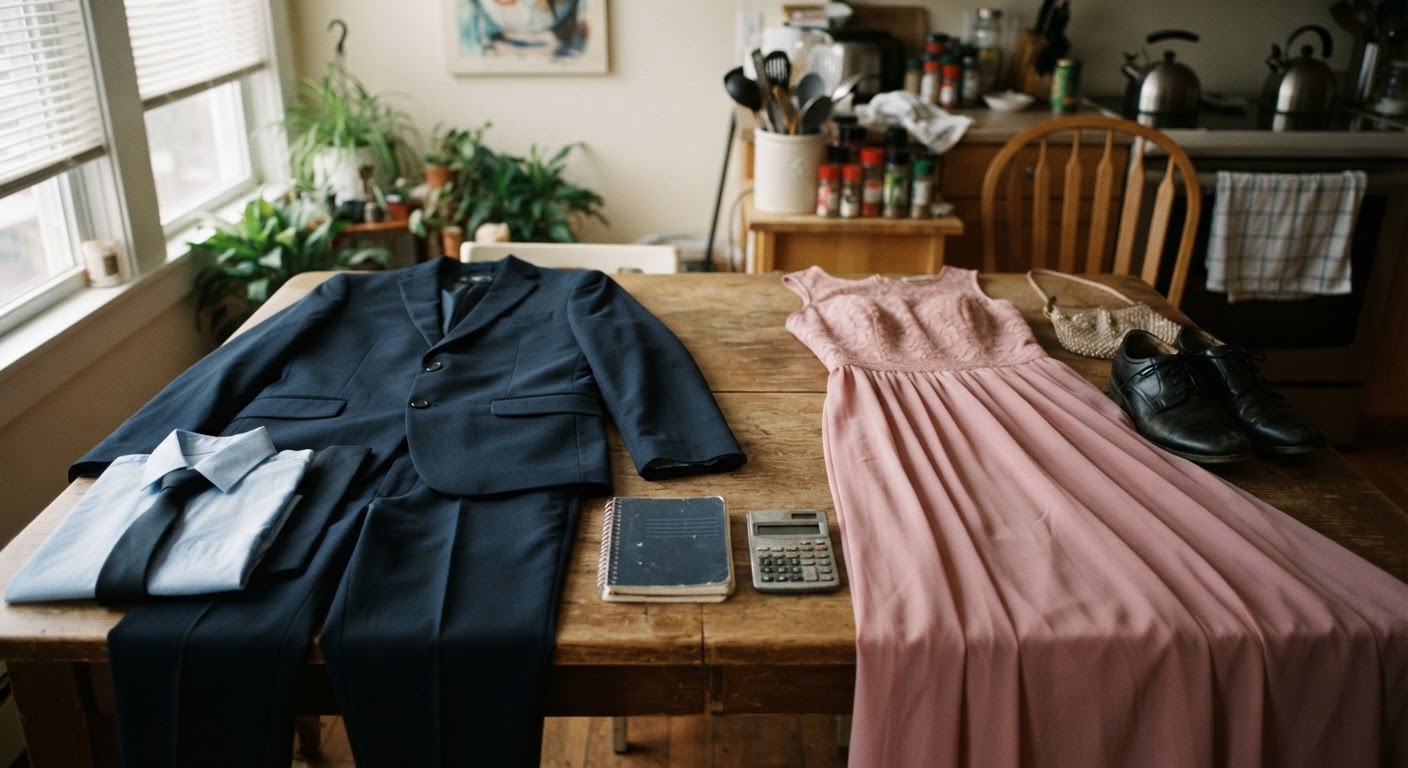
The text comes home on a Tuesday: “Prom is in six weeks.” Or maybe it’s homecoming, or a winter formal, or the junior banquet nobody warned you about. Either way, your first thought is probably the ticket price. Your second thought, if you’ve done this before, is a quiet groan, because you already know the ticket is the smallest piece of it. A single school dance can rack up costs that rival a full month of groceries, and it sneaks up on you precisely because it arrives in pieces instead of one bill. Here’s how to see the whole picture early and keep it from snowballing.
Breaking down where the real costs hide
Start by naming every single line item out loud, because half the damage comes from things you forgot to plan for until you were standing in a store with a receipt in your hand. The ticket itself is usually the easiest part — a fixed price, known weeks in advance. After that, things get slippery.
There’s the dress or the suit, which might be a rental, a purchase, or a hand-me-down, and each of those has a different cost shape. There are shoes, which almost never match what’s already in the closet. There’s hair and makeup, which can range from a friend with a curling iron to a salon appointment that costs as much as the dress. There are photos — the ones taken at home before the dance, and the professional ones sold at the venue, which are two very different expenses that get lumped together in a teen’s mind as “pictures.” Then dinner, which might be a fast-food stop or a sit-down restaurant with a group, and transportation, which might be a parent’s car, a rideshare, or a limo split six ways.
Write all of it down on one page before you spend a dollar. Not to be grim about it, just so you’re negotiating with real numbers instead of vibes. Most families are surprised that the ticket, the piece everyone assumed was the “cost of the dance,” is often less than a third of the total.
Setting a total dance budget with your teen before shopping starts, not after
The order of operations matters more than the amount. If you set a number after the dress is already picked out, you’re not budgeting, you’re just softening a blow. Sit down with your teen before any shopping happens and agree on one total figure that covers everything on that list — ticket, attire, shoes, hair, photos, food, ride. One number, not a pile of separate ones that can each creep upward on their own.
Then let your teen help decide how to split that number across categories. This is the part that actually changes behavior. A teenager who chooses to put more toward a dress and less toward hair styling because they’d rather do their own makeup is making a tradeoff they’ll stand behind. A teenager who’s just told “no” to a salon appointment after they’ve already found the dress they love is going to feel like the whole night got smaller, even if the dollar amount is identical.
This conversation also does something quieter but just as useful: it teaches the skill of allocating a fixed amount across competing wants, which is the exact skill they’ll need for every paycheck they ever earn. Framing it that way — “this is practice for real budgeting, not a punishment” — tends to land better than framing it as a limit being imposed on them.
Where to find gently used formal wear: school closets, community swap events, and resale apps
Formal wear is the category with the most room to save, because so much of it is worn once and then sits in a closet. Many schools now run a “prom closet” or similar program where donated dresses, suits, and accessories are available to students at no cost or a small fraction of retail. Ask the school counselor’s office directly — these programs are often underpublicized because they don’t want to advertise which families are using them, but they’ll usually tell any parent who asks that the option exists.
Community swap events are another underused source. Libraries, churches, and local parent groups sometimes organize seasonal clothing swaps timed right before dance season specifically because so many families are looking to offload a dress worn once. Even if there isn’t an organized swap near you, posting in a neighborhood or school parent group asking if anyone has a dress or suit to lend or sell is a low-effort way to turn up options nobody advertised publicly.
Resale apps have also gotten much better for formal wear specifically, with sellers often listing the exact style, size, and condition, and many dresses only worn for a few hours before being relisted. Search using the specific style name or color rather than just “prom dress,” since sellers tend to list detailed keywords to attract buyers who know exactly what they want.
The savings here aren’t small. A dress or suit found secondhand can cost a fraction of a rental or new purchase, and the quality difference is often invisible in photos, which is really all anyone remembers of the night anyway.
Group planning with other parents to split dinner, limo, or photo costs
Some of the biggest dance expenses are the ones nobody actually wants to pay for alone, which makes them perfect candidates for splitting. Limo or rideshare costs divided among a group of six or eight kids turn from a strain into something almost trivial per family. Group dinner reservations, arranged ahead of time at a restaurant that offers a set menu price, tend to run cheaper per person than a table of teenagers ordering individually and also keep the night from turning into an expensive last-minute decision about where to eat.
Photos are another place where group coordination pays off. Instead of everyone paying separately for professional shots at the dance venue, some families arrange for a home photo session before the dance where several kids and their dates get pictures taken together in one yard or driveway. It costs nothing beyond a phone camera and gives families just as many usable photos as the venue photographer, minus the markup.
The trick to making group plans work is starting the conversation early, ideally as soon as you know your teen’s group of friends for the night. A text thread among parents a month out (“thinking about splitting a car service, anyone interested?”) tends to get more buy-in than a scramble the week before, when everyone’s already made their own separate plans and locked in their own separate costs.
How to say no to the extras without ruining the night
Every dance season brings a fresh set of “everyone else is doing it” asks — the professional photo package, the salon blowout, the brand-new shoes that match perfectly instead of close enough. You don’t have to say yes to all of it, and you don’t have to feel guilty saying no, but how you say no matters.
The most effective approach is to let the budget say no instead of you. If your teen already helped set the total and chose how to divide it, then a request for an extra falls naturally into “sure, if we take it from another category” rather than a flat refusal. That shifts the conversation from a parent denying a want to a teen weighing a tradeoff, which is a much easier conversation for everyone involved.
It also helps to distinguish between the extras that actually shape the memory of the night and the ones that don’t. A teenager will remember who they went with, what the group did before and after, and maybe one good photo. They’re far less likely to remember whether that photo was taken by a professional with studio lighting or by a friend’s phone in decent evening light. Naming that distinction out loud — “the photo isn’t the memory, the night is” — tends to reduce the sting of trimming an extra more than any spreadsheet will.
If your teen still wants an extra badly enough, consider letting them cover the difference themselves through a small job, allowance savings, or a gift card they’ve been sitting on. That’s not a punishment either — it’s often the fastest way for a teen to decide how much they actually value something once it’s their own money on the line.
Starting a small sinking fund months ahead so the cost never hits one paycheck all at once
The single biggest thing that turns a dance into a budget crisis is timing — all these costs land in the same two or three weeks, right alongside rent, groceries, and everything else that doesn’t pause for prom season. The fix is almost embarrassingly simple: start setting aside a small amount months before the dance so the cost is already covered by the time it arrives.
Even a modest amount set aside starting at the beginning of the school year adds up to real coverage by spring. Put it somewhere slightly separate from your everyday spending — a labeled envelope, a separate savings pocket, whatever keeps it from quietly getting absorbed into the weekly grocery run. The separation matters more than the amount; money that’s visibly earmarked for “dance” is much less likely to get spent on something else in February.
If more than one dance is coming — homecoming in fall, prom in spring, a sibling with their own event a year apart — a running fund that gets refilled after each event rather than started from zero every time makes the whole cycle less stressful. You’re not scrambling twice a year; you’re just topping off a fund that’s already doing its job.
None of this requires a big financial overhaul. It just requires treating the dance like the predictable expense it actually is, instead of the surprise it always seems to be. Kids grow, seasons repeat, and dances come back around every single year — which means every single year, you get another chance to plan for it a little earlier and feel a little less pinched when the text finally comes home.