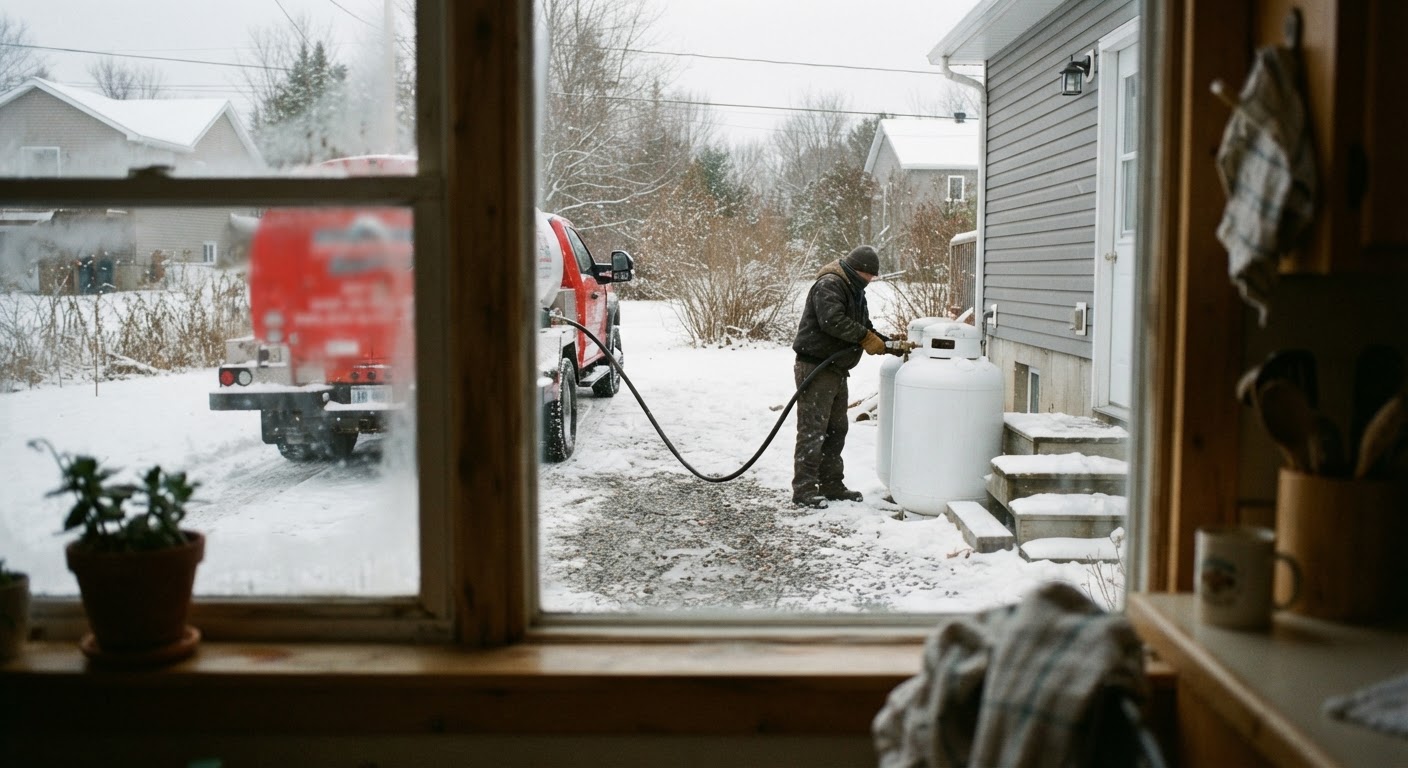
If you heat with natural gas or run on the electric grid, your price per unit is set by a public utility commission. There’s a hearing process, a rate case, a regulator whose whole job is making sure the company can’t just charge whatever it wants. Propane and heating oil don’t work that way. There’s no commission setting your per-gallon price, no rate case, no appeal process if you think you’re being overcharged. It’s a private market, closer to buying gasoline than paying a utility bill, except you can’t shop around at the pump because the “pump” is a truck that has to drive to your house.
That distinction matters more than most people realize until their first winter in a propane or oil-heated home. Your price per gallon is set by the supplier, based on their own wholesale costs, their delivery routes, how much competition exists in your area, and honestly, how much they think you’re paying attention. Two houses on the same street can be on completely different suppliers paying noticeably different rates, and neither one is doing anything wrong. There’s no universal published rate to compare against, which is exactly why so many people never question what they’re paying. It also means the tools that work for lowering an electric or gas bill, filing a complaint, requesting a rate review, don’t exist here. Your leverage is entirely commercial. It comes from being a customer suppliers want to keep, and from knowing enough about how their pricing works to ask better questions before you sign anything.
Will-Call, Automatic Delivery, and Locked-Rate Contracts
Most suppliers offer some version of three delivery arrangements, and the one you’re on has a real effect on your price.
Will-call means you decide when to order a delivery. You watch your tank gauge and call when you’re getting low. This gives you the most control over timing, meaning you can order during a price dip rather than whenever the supplier’s schedule says you’re due. The tradeoff is risk: if you misjudge and run out, emergency delivery fees are real and not small, and running a system dry can cause damage that costs more than any fuel savings you were chasing.
Automatic delivery means the supplier tracks your usage, sometimes with a monitor, sometimes just by degree-day estimates, and delivers before you run low without you calling. It’s convenient and lowers the running-out risk, but you lose the ability to time your buy. You’re paying whatever the rate is on the day they show up, which is often not the day you would have picked yourself.
Pre-buy and price-cap contracts are a different animal entirely. A pre-buy locks in a fixed price per gallon for the season, usually paid upfront or in installments, for a set number of gallons. A price-cap sets a ceiling, you never pay more than the cap, but you get to benefit if the market price drops below it during the season. Caps usually cost a bit more upfront than a straight pre-buy in exchange for that downside protection. Both are essentially you betting that prices will rise, and the supplier betting they won’t, so read them as the financial products they are, not just a heating plan.
Do You Own the Tank, or Are You Renting It?
This is the single biggest factor in how much pricing power you actually have, and a lot of people don’t know the answer for their own house.
If you own your tank, outright, no lease agreement attached, you are a free agent. You can call any supplier in your area, ask for their current rate, and switch on the spot if someone offers a better deal. Suppliers know this, which is part of why owned-tank customers often get quietly better pricing than leased-tank customers. You’re a customer anyone can win, so there’s more incentive to earn your business.
If your tank is leased or owned by the supplier who installed it, which is extremely common, especially if you never bought fuel service before moving in or never paid for the tank installation, you are typically locked into buying fuel from that company as a condition of the tank agreement. You can’t just call a competitor for a quote and switch, even if their price is dramatically better, because the tank sitting in your yard or basement legally belongs to someone else and the agreement usually says you buy their fuel or you lose the tank. This isn’t a small technicality. It’s the difference between having real negotiating leverage and having none at all.
If you’re not sure which situation you’re in, check your original installation paperwork or your last few invoices, tank rental fees are often itemized separately, or just call your supplier and ask directly whether you own the tank or lease it from them. It’s worth knowing before you do anything else on this list, because it changes which of the following moves are even available to you.
What to Ask Before You Sign a Seasonal Contract
Seasonal supply contracts, whether will-call with a locked rate, a pre-buy, or a price cap, tend to bury their real cost in places most people don’t think to look. Before you sign anything, ask specifically about each of these:
What’s the per-gallon rate, and does it include delivery, or is delivery billed separately per visit? Some quotes look great until you find out delivery is charged on top of every fill, essentially making the advertised rate meaningless.
Is there a tank rental or lease fee, and is it charged annually, monthly, or built into the per-gallon price? This one especially matters if you don’t own your tank. Some suppliers waive the rental fee if you commit to a minimum number of gallons per season, others charge it no matter what you use.
What happens if you use less fuel than the contract assumes, or more? Pre-buy contracts are usually written around an estimated seasonal usage. If you use less, ask whether unused prepaid gallons roll over, get refunded, or just evaporate. If you use more, ask what rate applies to gallons beyond the contracted amount, sometimes it reverts to a much higher market rate.
Is there a minimum delivery amount or a minimum number of deliveries per season? Some contracts require you to accept a certain number of fills whether your tank needs it or not.
Is there an early termination fee if you switch suppliers or sell the house mid-contract? Ask this even if you’re not planning to move. Life happens, and you want to know the exit cost before you’re in one.
Are there fees for a service plan, equipment inspection, or “budget billing” enrollment that get added automatically unless you decline them? These are often opt-out rather than opt-in, meaning they show up on your bill unless you specifically say no.
Get the answers in writing, not just from a phone call, and read the actual contract page that covers cancellation and overage pricing before you sign. Verbal reassurances from a sales rep don’t hold up against the terms printed on the page.
Locking In a Summer Price vs. Riding the Market
The general seasonal pattern for both propane and heating oil is that prices tend to be lower in the warmer months, when demand for home heating is minimal, and higher heading into and through winter, when everyone needs a fill at the same time. This isn’t guaranteed every single year, markets move on their own logic, but it’s the pattern reliable enough that many suppliers build their pre-buy programs around it, offering their best locked rates for filling tanks in the late spring or summer.
Locking in a summer price makes the most sense if you have a stable, predictable usage pattern year to year, you can afford to prepay or commit without it straining your month-to-month budget, and you’d genuinely lose sleep over a volatile winter price spike. It’s a trade of some upside for a lot of certainty. You might occasionally lock in above where the market ends up, but you also won’t be caught by a cold snap that sends prices climbing right when your tank is empty.
Riding the market month to month, buying on will-call as needed, makes more sense if your usage is unpredictable, if you don’t have the cash flow to prepay a season’s worth of fuel, or if you’re the type who will actually watch prices and time your fills. It gives you flexibility, but it also means you’re exposed if a hard winter drives prices up right when you need to buy. There’s no universally correct answer here, it depends on how much price certainty is worth to you versus how much flexibility you need, and how closely you’re realistically going to track the market yourself.
A reasonable middle ground some households use is locking in only a portion of expected usage, say enough to cover a baseline amount, while leaving room to buy the rest on will-call if prices stay low. It reduces your exposure without committing your entire season to a single bet.
Switching Suppliers When You Own the Tank
If you’ve confirmed you own your tank outright, switching suppliers is genuinely simple, and it’s worth doing periodically even if you’re happy with your current company, because loyalty rarely gets rewarded in this market the way it might elsewhere.
Start by calling two or three suppliers in your area and asking for their current per-gallon rate for someone with an owned tank, along with their delivery fee structure and whether they offer any new-customer pricing. Ask about the same items covered above, delivery charges, minimum gallons, contract length, so you’re comparing full costs rather than just the headline rate.
Before you actually switch, check a few things on your end. Confirm your tank size and age, some suppliers want to inspect a tank before filling it, especially if it’s been a while since its last inspection or if you’re not sure of its certification status. Check whether your current supplier requires advance notice to end service, even without a contract, some expect a heads-up before you stop ordering from them. And time the switch around your fuel level, ideally you want your current tank fairly low before the new supplier’s first delivery, both so you’re not paying two companies for overlapping fuel and so the transition is clean.
Once you’ve made the switch, it’s worth revisiting the comparison every year or two rather than assuming your new supplier’s rate will stay competitive indefinitely. Prices shift, competition in your area can change, and the only real protection you have in an unregulated market is staying willing to ask around.