If you rent your home, you’ve probably resigned yourself to the idea that solar power is something other people get to benefit from — the people with roofs they own, decent credit for a loan, and a long enough stay in one place to make the investment worth it. Community solar flips that assumption. It lets you subscribe to a share of a solar farm built somewhere else entirely, and instead of panels on your roof, you get a credit on your electric bill every month. No installation, no roof access, no long-term ownership commitment. Here’s how it actually works, where to find it, and what to watch for before you sign anything.
What community solar actually is and how the credit shows up on your bill
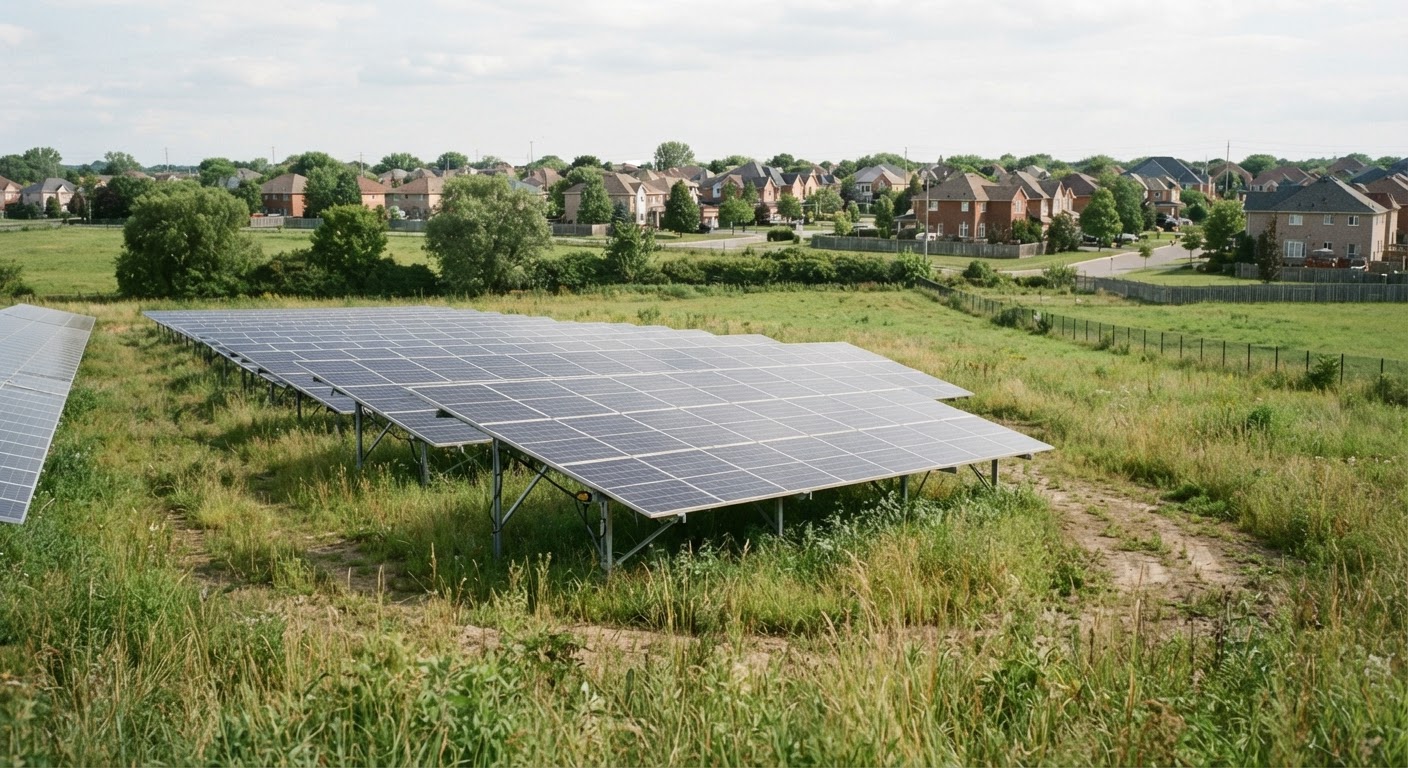
A community solar program is a shared solar installation — usually a good-sized field of panels — built by a developer somewhere in your region. Instead of one property owner using all that power, the output gets divided among dozens or hundreds of subscribers, each of whom gets credited for their share of the electricity the farm generates.
You still stay connected to your regular electric utility. Nothing changes about your wiring, your meter, or how your lights turn on. What changes is the paperwork behind the scenes: the solar farm sells its power into the grid, the utility calculates a dollar value for the portion tied to your subscription, and that value shows up as a line-item credit on your regular electric bill. In most setups you keep paying your utility as usual, but the bill total is lower because of the solar credit applied to it.
Some programs bill you separately — you get an invoice from the solar company for a discounted rate, and a credit from the utility, and the two are meant to roughly offset each other so you come out ahead overall. This two-bill setup trips people up because it doesn’t feel like straightforward savings at first glance; you’re paying one company and getting credited by another. It’s worth reading a sample bill from any program before you subscribe so you understand exactly what you’ll see land in your inbox or mailbox each month.
How to find out if a program exists in your utility’s service area
Community solar isn’t available everywhere. It depends on your state’s energy rules and whether your specific utility participates in what’s usually called a “shared” or “community” solar arrangement. Some states have robust programs with multiple solar farms competing for subscribers. Others have none at all, or programs limited to specific utility territories within the state.
The most reliable way to find out is to call your electric utility directly and ask, in plain language, “Do you have a community solar program, and can renters subscribe?” Utility customer service lines deal with this question often enough now that most reps can answer it quickly, or route you to the right department. You can also check your utility’s website — many list approved community solar projects in a section about renewable energy options, sometimes buried under a tab like “green power” or “clean energy programs.”
A second approach is searching for community solar developers operating in your state or metro area. These companies build and manage the solar farms, and they typically run their own signup pages where you enter your address and utility account to check eligibility on the spot. Because subscriptions are tied to specific solar farms with limited capacity, availability can be spotty — a farm might be fully subscribed in your zip code even though the same company has room in a neighboring one. If you get a “no capacity right now” message, ask to be put on a waitlist; farms lose subscribers regularly when people move.
One thing worth confirming early: your subscription is tied to your utility account, not your address. If you rent and expect to move within the same utility territory, that matters. If you might move somewhere served by a different utility, that matters even more, which brings us to contract terms.
What subscription terms to watch for, including cancellation fees and length of commitment
This is where community solar subscriptions can quietly turn from a good deal into a headache, so it’s worth slowing down before you sign anything. A few specific terms deserve a close read.
Length of commitment. Some programs are month-to-month with no minimum term, which is exactly what a renter on unpredictable footing wants. Others lock you in for a year or more. If you’re the kind of renter who might move across town, across a utility line, or out of state within the next year or two, a no-minimum-term program is worth prioritizing even if the savings percentage is slightly lower elsewhere.
Cancellation fees. Longer-term subscriptions sometimes carry an early termination fee if you cancel before the contract period ends. These fees vary by provider and are usually spelled out in the subscription agreement, not just mentioned verbally. Ask directly: “If I need to cancel next month, what do I owe?” A program worth signing up for should be able to answer that question in one sentence, not send you digging through a PDF.
What happens if you move. Because subscriptions are attached to a utility account, moving to a new address served by the same utility is usually a simple transfer. Moving outside that utility’s territory typically means the subscription ends — check whether that triggers any fee or penalty, or whether it’s treated as a no-cost cancellation since it’s outside your control.
Automatic renewal. Some contracts renew automatically at the end of a term unless you actively cancel. That’s not necessarily bad, but you want to know it’s happening so you’re not caught off guard, and so you know the window in which you could switch to a better-priced program if one becomes available.
How the discount is calculated and whether it can change. Ask whether your discount rate is fixed for the life of the subscription or whether it can be adjusted. Some programs guarantee a percentage discount off your utility’s standard rate indefinitely; others reserve the right to adjust pricing with notice. A fixed, guaranteed discount is easier to plan around than a variable one.
None of these terms are dealbreakers on their own — plenty of solid programs have a one-year minimum term, for instance. The point is to know the terms before you sign, not after you’re trying to cancel.
Typical savings range and how it compares to your current per-kWh rate
Savings on community solar subscriptions typically come in the form of a percentage discount off your utility’s standard electricity rate, applied to the portion of your usage covered by your subscription share. Programs generally advertise a modest but real discount off the going rate — enough to make a noticeable dent in a monthly bill without promising anything dramatic. The exact percentage varies by state, by utility, and by the specific solar farm’s economics, so it’s worth treating any number a broker quotes you as a starting point for comparison rather than a guarantee.
To actually judge whether a subscription is worth it, pull up a recent electric bill and find your per-kilowatt-hour rate — it’s usually listed explicitly, often labeled something like “energy charge” or “supply rate.” Compare that number to the rate the community solar program is offering. If the program’s rate is meaningfully lower than what you’re currently paying and there’s no restrictive contract attached, it’s likely a straightforward win. If the numbers are close, or if the program bills you separately from your utility, do the math on both bills together for a full month before assuming you’re saving anything.
It’s also worth checking whether your subscription share is sized appropriately for your usage. Providers usually size your share based on your historical electricity use, aiming to cover most or all of what you consume. If your household usage changes significantly — say you start working from home more, or your family grows — it’s reasonable to ask the provider to adjust your subscription size so you’re not left paying full retail rate for the portion your subscription no longer covers.
Red flags that signal a subscription broker isn’t worth signing with
Community solar has attracted its share of aggressive sales tactics, especially door-to-door and phone solicitations, because the pitch — “free savings, no installation” — is an easy sell. A few warning signs are worth knowing before you sign anything a sales rep hands you.
Be cautious of anyone who shows up unannounced, whether at your door or via cold call, and pressures you to sign on the spot. Legitimate community solar programs don’t need same-visit signatures; the paperwork will still be there tomorrow, and a reputable provider will happily let you take a day to look over the contract.
Be wary of vague savings promises that don’t reference your actual utility rate. A trustworthy program should be able to tell you, in specific numbers, what discount you’ll get off your specific utility’s specific rate — not a general claim like “save hundreds a year” without any connection to your actual bill.
Watch for requests for sensitive information beyond what’s needed to check eligibility and set up billing. You’ll typically need to provide your utility account information so the provider can verify your service and set up the credit, but you shouldn’t need to hand over a Social Security number, bank login, or full account passwords to a door-to-door rep. If something about the request feels excessive, it’s fine to say you’ll follow up directly with the provider’s official customer service line instead.
Also be skeptical of any pitch that implies your utility is somehow forcing you to switch, or that failing to sign up will result in higher bills or service issues. Community solar subscriptions are optional. No legitimate rep should be creating urgency by suggesting otherwise.
Finally, look up the company name plus the word “reviews” or “complaints” before signing. A quick search often surfaces patterns — like widespread reports of billing confusion, difficulty canceling, or fees that weren’t disclosed upfront — that are worth knowing about before you’re a subscriber trying to sort them out yourself.
Community solar isn’t going to transform a tight household budget overnight, but it’s one of the few genuinely passive ways to shave a recurring cost without doing much more than a phone call and a signature. If a program exists where you live and the terms are reasonable, it’s worth the twenty minutes it takes to check.