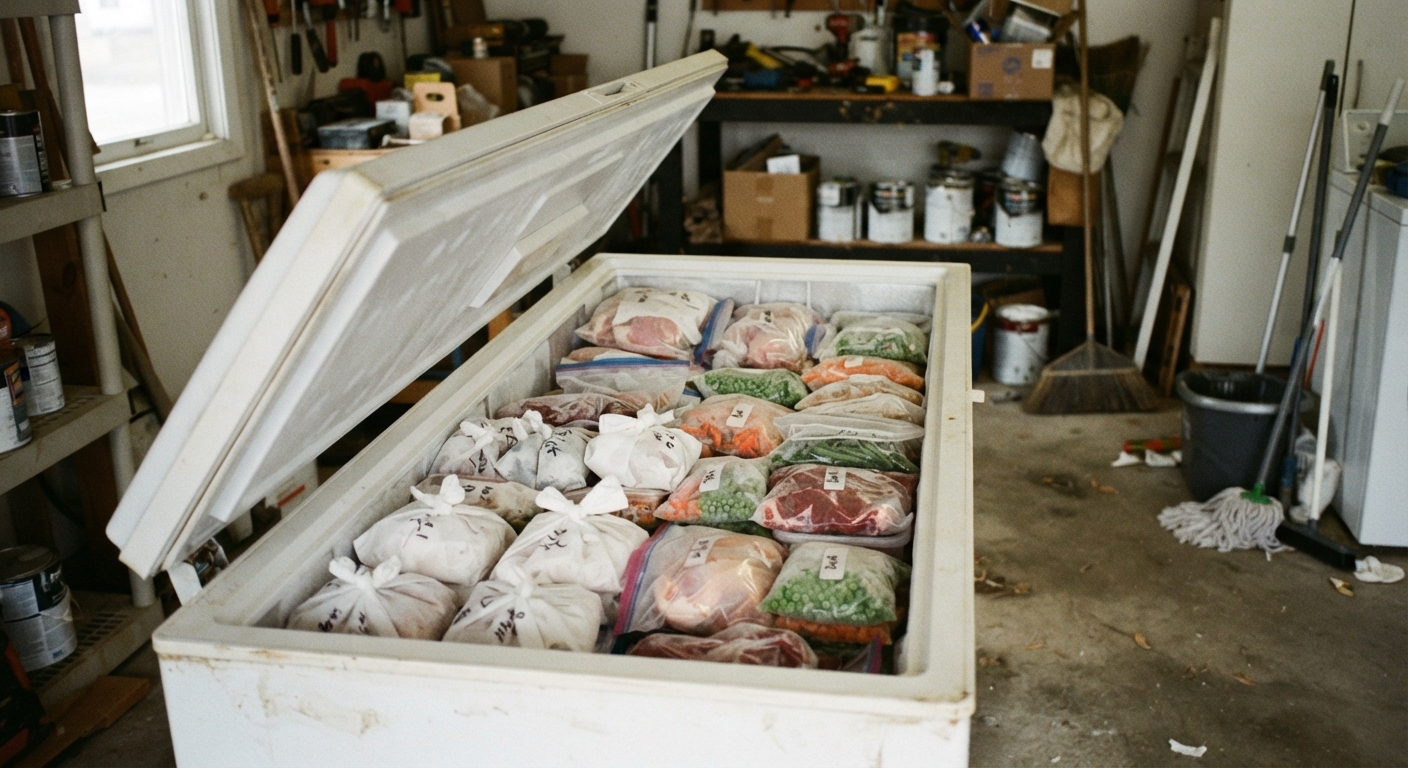
Every parent who’s stood in front of a chest freezer at the appliance store has done the same math in their head: is this thing actually going to save me money, or is it just going to sit in the garage humming away, costing me electricity for the privilege of storing three bags of frozen peas? The honest answer is it depends on how you shop and cook, but for a lot of households, a chest freezer earns back its price faster than people expect. Here’s how to figure out whether your household is one of them, using real numbers instead of guesswork.
The upfront cost of a chest freezer versus the monthly electricity to run one
New chest freezers range widely depending on size, but a mid-size model that holds enough to matter for a family of four typically lands somewhere in the low-to-mid hundreds of dollars. Larger units cost more, smaller ones less. That’s the number most people fixate on, but it’s only half the picture. The other half is what it costs to keep running every month.
Chest freezers are generally more energy-efficient than upright freezers because cold air sinks and stays put when you open the lid, instead of spilling out the way it does when you open a door. A standard chest freezer usually draws a modest amount of power, often somewhere in the range of a large light fixture running continuously. On most household electricity rates, that translates into a monthly cost that’s noticeably less than people assume, often less than the cost of two or three takeout meals.
The exact number depends on your unit’s size, its age, your local electricity rate, and where you put it. A freezer in a hot garage in summer will work harder than one in a cool basement, so location matters more than people realize. If you’re trying to estimate your own cost, check the yellow energy guide sticker that comes with new units, or look up the wattage on a used one and multiply by your electricity rate. That gives you a real monthly number to work with instead of a guess, which matters for the break-even math later.
How much you actually save buying meat, bread, and produce in bulk when you have freezer space
This is where the freezer starts to pay for itself, but only if your shopping habits actually change once you have the space. Buying a single family pack of chicken thighs at regular price and buying a much larger quantity when it’s on sale, then freezing the extra, are two very different price points. The same goes for ground beef, pork shoulder, and whole chickens, which regularly go on deep discount around holidays or when stores are trying to move inventory before a sell-by date.
Bread works the same way. Loaves marked down because they’re approaching their date freeze beautifully and thaw just fine, so a household that eats a lot of sandwiches can stock up when bread is discounted instead of paying full price every week.
Produce is the sneakiest savings category because people don’t think of it as freezer food. Berries, corn, green beans, peppers, and shredded squash all freeze well, and buying them at peak season when prices drop, then freezing what you won’t eat that week, means you’re not paying winter prices for summer produce. The same goes for buying a large bag of a vegetable your family eats often when it’s discounted, rather than the small bag at full price every single trip.
Batch cooking adds another layer of savings that’s easy to underestimate. If you make a double batch of chili, soup, or a casserole and freeze half, you’re not just saving on ingredients bought in bulk, you’re also saving on the energy cost of cooking twice, and on the nights you’d otherwise order delivery because nobody had time to cook. That last part is soft savings, but it’s real, and households that batch cook consistently often notice their takeout spending drops without them trying to cut it.
None of this requires buying obscure bulk-club sizes of everything. It just requires enough freezer space to say yes when something you actually eat goes on sale, instead of having to pass because your current freezer is already packed with ice trays and a bag of frozen peas from two years ago.
Calculating your break-even point based on your household size and shopping habits
Here’s where you turn this from a feeling into a number. Start with the purchase price of the freezer, then add roughly a year of estimated electricity cost using the wattage math from earlier. That total is your real first-year cost.
Next, estimate your monthly grocery savings honestly. A simple way to do this: think back over the last few months and count how many times you passed on a sale because you didn’t have room to store the extra, or bought a smaller size at a worse per-unit price because that’s all that would fit. If meat sales in your area run noticeably lower than regular price, and you’d realistically stock up two or three times a month, multiply the price difference by the quantity you’d actually buy, not the quantity you wish you’d buy. Overestimating here is the most common mistake people make, and it leads to disappointment six months in.
A household of four that cooks most meals at home and has access to regular meat and produce sales might realistically save a modest but meaningful amount each month just from buying at better prices and batch cooking. A single parent with a smaller household and less storage need will save less in raw dollars but may still break even reasonably fast if they use the freezer consistently rather than sporadically. A household that eats out often or doesn’t cook in bulk may find the freezer takes much longer to pay off, and that’s worth knowing before you buy rather than after.
Divide your total first-year cost by your realistic monthly savings estimate, and you’ll get a break-even point in months. If that number is longer than two or three years, it might be worth renting extra freezer space isn’t really a thing most people can do, so in that case, consider whether a smaller unit or simply making better use of your current freezer might get you most of the benefit without the upfront cost at all.
Where to find a used or off-season chest freezer for less
Buying new isn’t the only path, and for a lot of households it isn’t the smartest one. Chest freezers are durable appliances that often outlast the people who own them, which means secondhand listings are common and usually reliable if you check a few things first.
When looking at a used unit, ask how old it is and whether it’s been running continuously or sitting unused. A freezer that’s been unplugged for a long stretch can sometimes have a compressor that struggles to restart, so it’s worth asking the seller to plug it in and let you hear it run before you commit. Listen for excessive noise or a compressor that cycles constantly rather than settling into a normal rhythm, which can be a sign of an aging or struggling unit.
Timing your purchase matters almost as much as where you buy. Retailers often discount freezers in late winter and early spring, after the holiday cooking season has passed and before summer produce season creates demand. Buying during that lull, whether new or used, tends to get you a better price than buying in the fall when everyone else has the same idea about stocking up for winter.
Community marketplace listings, moving sales, and estate sales are also worth checking, especially in areas where people are downsizing or relocating and don’t want to pay to move a large appliance. It’s common to find perfectly functional units priced well below retail simply because the seller wants it gone quickly.
Simple organization systems so food doesn’t get lost and wasted in the bottom
A chest freezer only saves you money if you actually use what’s in it. The classic complaint about chest freezers, that things sink to the bottom and get forgotten until they’re covered in frost and unrecognizable, is real, but it’s also completely solvable with a little bit of setup.
The simplest fix is using stackable bins or milk crates to divide the space into zones instead of one open pit. One bin for meat, one for bread and baked goods, one for vegetables, one for prepared meals. This turns digging through a jumbled freezer into lifting out one bin at a time, which takes seconds and means nothing gets buried for months.
Labeling matters more than people expect. A piece of tape with the contents and the date it went in the freezer means you’re not guessing later, and it means older items get used before newer ones instead of sitting forgotten while you keep adding to the pile. A basic rule of using the oldest items first keeps rotation natural instead of requiring you to remember anything.
Keeping a simple running list, even just a sheet of paper taped to the freezer lid or a note on your phone, of what’s inside and roughly how much, saves you from both over-buying at the store and forgetting what you already have. Cross items off as you use them and add new items as they go in, and you’ll always know at a glance whether you actually need more chicken or whether you’ve got plenty and should spend that money elsewhere this week.
Finally, do a quick check every month or two where you pull everything out, wipe down the bins, and make a mental note of anything that’s been sitting untouched for a long stretch. That’s usually a sign either to plan a meal around it soon or to reconsider buying that item in bulk next time. The goal isn’t perfection, it’s making sure the food you paid a discounted price for actually gets eaten, because that’s the entire point of the freezer in the first place.