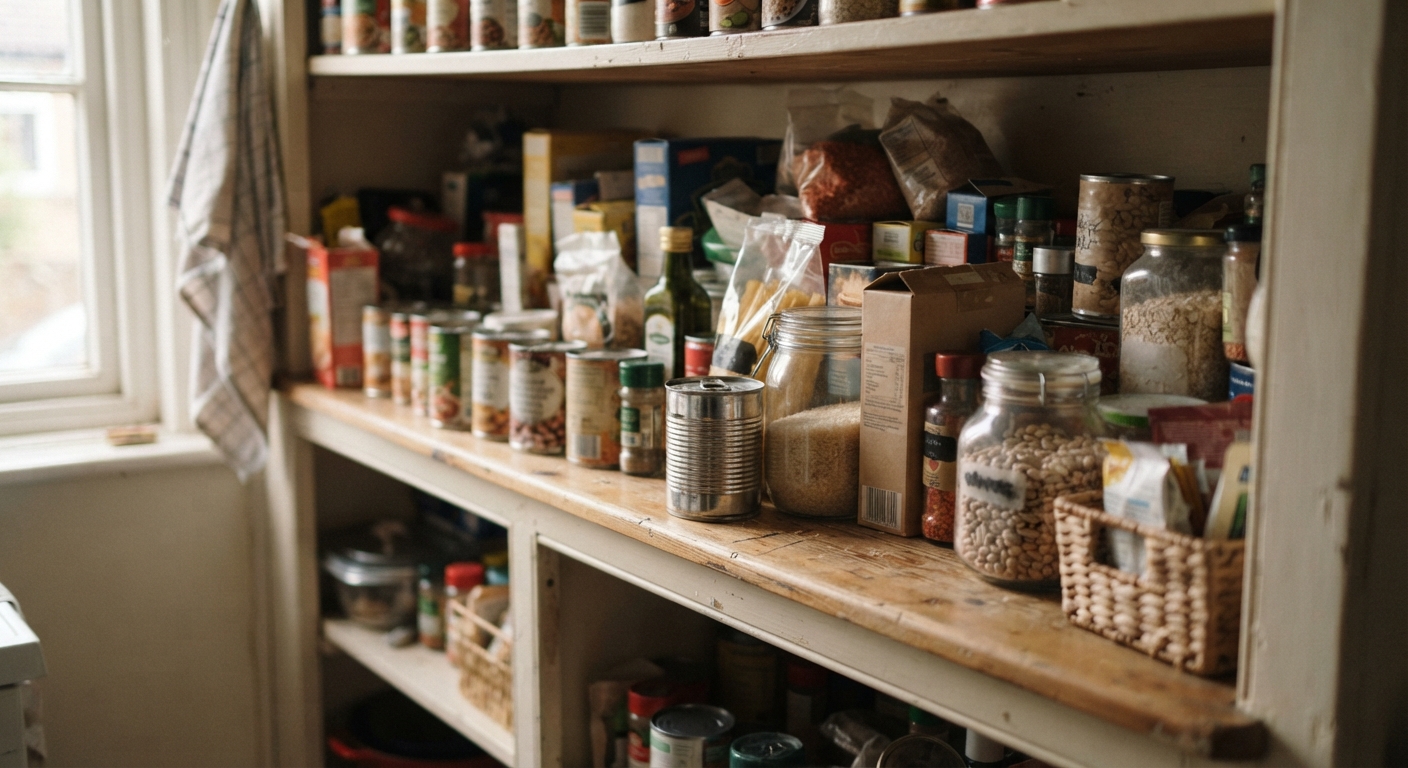
Taking Inventory Before You Plan a Single Meal
Most meal planning advice starts backwards. It has you flipping through recipes or scrolling food blogs before you’ve even looked at what’s sitting in your own kitchen. That’s how you end up buying a jar of capers for one recipe while three cans of beans go stale in the back of the pantry. The whole point of pantry-first planning is to reverse that order: you inventory what you have, and the meals get built around it, not the other way around.
Set aside twenty minutes this week to do a real walkthrough. Not a glance — an actual inventory. Pull everything out of the pantry, fridge, and freezer and put it on the counter where you can see it. This sounds excessive, but the value of a household pantry system is not just knowing you have rice. It’s knowing you have three half-used bags of rice, a can of coconut milk from last winter, and frozen peas that have been in the door bin so long you forgot they existed.
As you go, sort things into three rough piles:
- Ready to use now — fresh produce, opened items, anything close to its date
- Shelf-stable staples — dry goods, canned items, grains, oils, spices
- Freezer stock — meat, vegetables, bread, leftovers you froze and meant to eat
Write it down. A notes app, a whiteboard on the fridge, whatever you’ll actually look at again — the format matters less than the habit of keeping a running list. Once you have it, you’re not planning meals in the abstract anymore. You’re solving a puzzle with real pieces already on the table.
A tip that saves a lot of second-guessing: date what you can as you go. A piece of masking tape and a marker take thirty seconds and turn “I think this chicken is still fine” into an actual answer next week.
Matching Pantry Staples to Cheap Fresh Additions
Once you can see your staples clearly, the next step is figuring out what small, inexpensive fresh items would unlock the most meals. This is where pantry-first cooking actually saves money, because you’re not buying a full grocery list — you’re buying the two or three things that turn what you already own into dinner.
Think of your shelf-stable staples as the base layer of a meal and fresh additions as the accent that makes it feel like a real dish instead of “eating from the pantry.” A few pairings that consistently work:
- Rice or pasta + a bag of frozen mixed vegetables + an egg or a can of beans
- Canned tomatoes + dried beans or lentils + one onion and a few cloves of garlic
- Oats or cornmeal + a small amount of fresh fruit or a jar of jam you already have
- Canned tuna or chicken + mayo or a vinaigrette + whatever crunchy vegetable is cheapest that week
Notice the pattern: the staple does the heavy lifting, and the fresh item is usually something in the one-to-three-dollar range — an onion, a bunch of carrots, a bag of spinach, a dozen eggs. You’re not trying to recreate a Pinterest meal. You’re trying to spend a little bit of fresh-food money to make a lot of pantry food feel worth eating.
This is also the moment to check your spice situation honestly. A tired can of beans becomes a different meal with cumin and chili powder than it does plain. If your spice rack is bare, that’s a better use of a few dollars than almost anything else in the store, because spices make repeated staple-based meals feel less repetitive.
Don’t Skip the Freezer
Freezer contents get treated like an afterthought, but they’re often the most expensive food in your kitchen sitting there unused. Ground meat, frozen vegetables, bread, even that half bag of shredded cheese — these are groceries you already paid for. Before you buy anything new in a category, check whether the freezer already covers it. A frozen chicken thigh you forgot about is functionally the same as one you’d buy today, except it’s free.
A Weekly Rotation That Uses Up Food Before It Expires
Inventory and pairings only help if you actually sequence the week so nothing goes bad before you get to it. This is the part people skip, and it’s the part that saves the most money, because food that spoils unused is money that left your house for nothing.
Instead of planning meals by day of the week (“Monday: tacos”), plan them by what’s most perishable first. A simple rotation looks like this:
- Days 1–2: Use the freshest, most perishable items — anything you bought recently, or produce that’s already starting to soften. This is where a lot of your “ready to use now” pile goes.
- Days 3–4: Move to items with a slightly longer window — hardier vegetables, dairy, anything in the fridge that can hold a few more days.
- Days 5–7: Lean on shelf-stable staples and freezer stock. By this point you’re cooking mostly from things that don’t have a ticking clock, which gives you flexibility if the week got busy or money got tight.
This ordering does double duty. It reduces waste because the things that spoil fastest get eaten first instead of forgotten behind sturdier items. And it builds in flexibility for the back half of the week, when plans change, kids get picky, or you’re just tired — because pasta and canned sauce don’t care if dinner happens at 5:00 or 8:00.
If you’re cooking for a family with different schedules, it also helps to designate one night as a genuine “clean-out” night — where the meal is explicitly built from whatever odds and ends are left, no new plan required. Fried rice, a frittata, a big pot of soup, or a “everything on a sheet pan” roast are all forgiving enough to absorb a mismatched handful of vegetables and a little bit of protein. Treating this as a real, planned meal — not a failure to plan — takes the pressure off the rest of the week.
Leftovers Are Part of the Rotation, Not an Exception
A lot of households cook a big batch of something and then treat the leftovers as a separate, slightly sad problem to deal with later. Build them into the plan instead. If you’re making a pot of chili on Day 2, decide right then whether Day 4 is “chili again” or “chili turned into something else” — over rice, in a tortilla, on top of eggs. Deciding in advance means the leftovers actually get eaten instead of shuffled to the back of the fridge until they’re not appealing anymore.
Building Your Shopping List Around the Gaps, Not the Wants
This is the step that makes the whole system pay off. Once you’ve done your inventory and sketched a rough week of meals, your shopping list should be short — and it should be built entirely around gaps, not cravings.
A gap is something you genuinely need to make a planned meal work: the onion your soup requires, the eggs you’re out of, the bread for tomorrow’s lunches. A want is the thing that jumps into the cart because it looked good on the shelf or because you’re hungry while shopping. Both are normal impulses, but only one of them belongs on a list built from what you already have.
Before you go to the store, run through this quick check for each meal in your rotation:
- What do I already have that this meal uses up?
- What’s the one or two fresh items missing to complete it?
- Is there a cheaper stand-in for that missing item already in the house?
That third question does a lot of quiet work. If a recipe calls for fresh basil and you don’t have it, dried oregano from the spice rack might get you 80% of the way there for free. If it calls for heavy cream and you have milk and a little butter, that’s usually close enough for a weeknight sauce. Pantry-first cooking isn’t about rigid recipes — it’s about being willing to substitute your way to “good enough” instead of buying your way to “exactly right.”
When you get to the store, resist restocking categories you already have covered just because they’re on sale. A sale on a food you’re not out of isn’t savings — it’s spending. The exception is genuine staples you go through steadily and that store well: rice, dried beans, oats, canned tomatoes. If those are on sale and you have the pantry space, stocking up a little is reasonable. But that’s a deliberate decision, not a reflex.
Keep a Running “Gap List” All Week
Rather than trying to reconstruct your gaps from memory on shopping day, keep an ongoing list on the fridge or in your phone. The moment you use the last of something — the last egg, the last onion, the last squeeze of a condiment — write it down immediately. By the time shopping day arrives, you’re not guessing what you need; you already have an accurate list built from real usage instead of a walk through the store aisles hoping something looks familiar.
Over a few weeks, this approach tends to reveal something useful on its own: which staples your household actually goes through, and which ones you keep buying out of habit and rarely touch. That’s worth paying attention to, because it’s the clearest signal you’ll get about where your grocery money is genuinely working for you — and where it’s just sitting on a shelf, waiting to become another item on next month’s inventory pile.