What’s really driving your seasonal spikes
If your electric bill looks like a calm little lake most of the year and then turns into a rollercoaster in July and January, you’re not imagining it and you’re not doing anything wrong. That pattern is baked into how homes work. Heating and cooling are, by a wide margin, the biggest energy users in most households, and they’re also the two systems that have to fight the hardest against whatever the weather is doing outside. A mild spring day asks almost nothing of your HVAC system. A ninety-five-degree afternoon or a fifteen-degree night asks a lot, and your meter notices.
There’s a second, sneakier factor: the bigger the gap between the temperature outside and the temperature you want inside, the harder your system works, and that relationship isn’t a straight line. Pushing your home 10 degrees cooler than a mild day outside takes some energy. Pushing it 25 degrees cooler than a brutal one takes a lot more than double. So the spikes you see aren’t just “it’s hot, so we use more” — they’re “it’s hot, so we use disproportionately more.”
Layer on top of that the shorter days of winter, which mean more lighting hours, and the extra laundry, humidifiers, space heaters, or fans that come out depending on the season, and you’ve got a bill that swings widely even though your day-to-day habits haven’t changed much at all.
The reason this matters for budgeting isn’t just curiosity — it’s that once you understand which part of the bill is “weather tax” versus which part is “stuff I can actually control,” you stop trying to fix the whole bill and start fixing the piece that responds to effort.
Small equipment fixes that lower peak usage
You don’t need a renovation to take the edge off your peak months. Most of the highest-value fixes are small, cheap, and take an afternoon.
Seal the gaps before you touch the thermostat
Weatherstripping around doors, a draft snake at the bottom of exterior doors, and caulk around window frames are unglamorous, but they’re the reason a lot of conditioned air escapes without you ever noticing. If you rent, check your lease before making permanent changes, but temporary foam weatherstripping and door draft blockers are almost always fine and they travel with you when you move.
Give your HVAC system less resistance
A dirty air filter forces your system to run longer to do the same job. Checking it monthly during peak season and swapping it when it looks gray instead of white is one of the cheapest habits in this whole article. If you have window unit air conditioners, cleaning the filter and making sure nothing is blocking airflow on either side makes a real difference in how hard the unit has to work.
Use curtains and blinds like actual equipment, not decoration
In summer, closing blinds or curtains on the sun-facing side of your home during the hottest hours keeps a surprising amount of heat from ever becoming your air conditioner’s problem. In winter, open them during sunny daytime hours to let free heat in, then close them at night — glass is one of the least insulated parts of your home, and closed curtains add a real barrier against the cold radiating off the window.
Rethink your fans
Ceiling fans don’t cool a room in the way people assume — they cool people, by moving air across skin. Running one lets you raise your air conditioner’s target temperature by a couple of degrees without feeling any less comfortable, which is a real reduction in run time. In winter, most ceiling fans have a reverse switch that pushes warm air pooled near the ceiling back down into the room — worth using if your fan has it.
Address the biggest single-hour spikes
Water heating is a quieter seasonal driver, since incoming water is colder in winter and your heater works harder to raise it to the same temperature. Lowering the thermostat on your water heater to a moderate setting (many are set higher than needed) and insulating exposed hot water pipes in unheated spaces like a garage or basement are one-time fixes that pay off every month afterward.
Consider a smart or programmable thermostat if you don’t have one
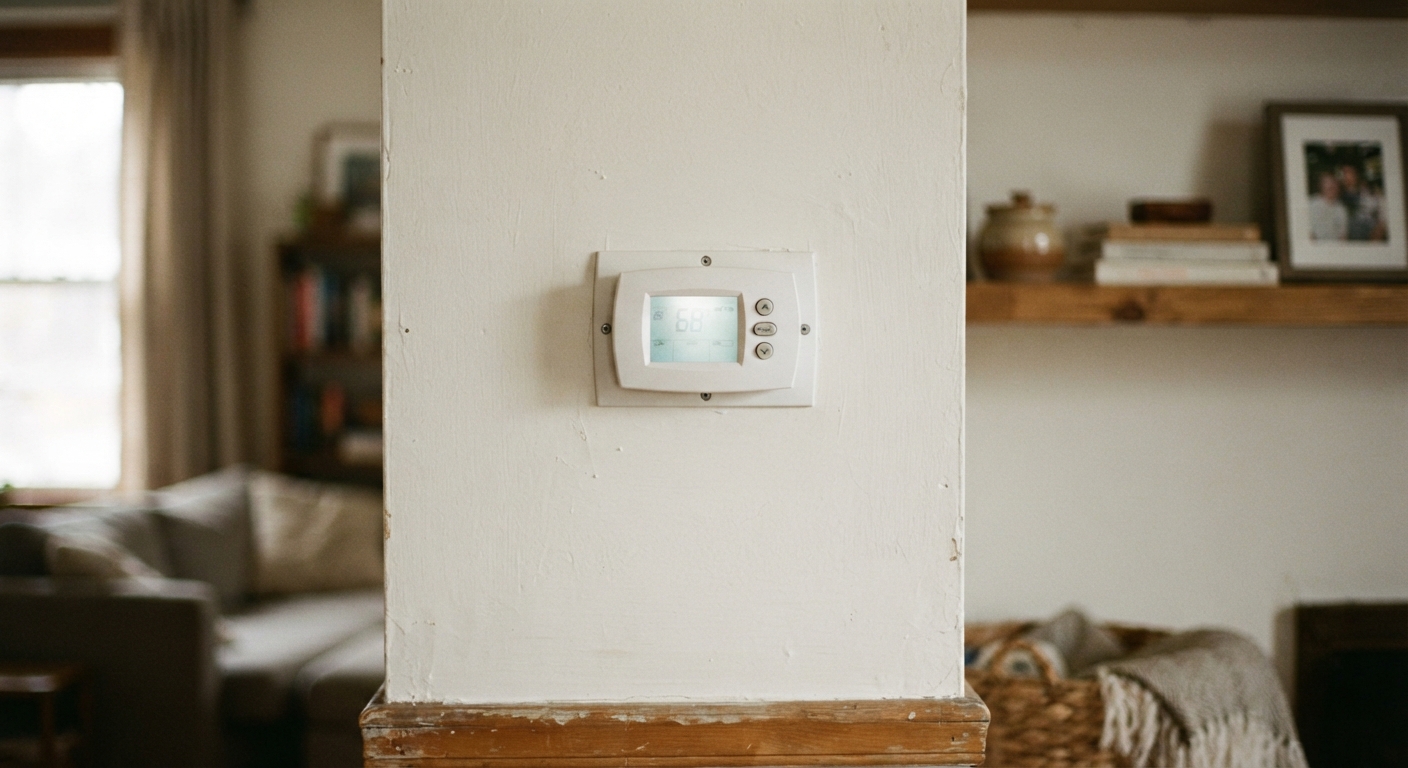
The value isn’t the “smart” part — it’s that a programmable thermostat lets you automatically ease off when no one’s home or everyone’s asleep, without relying on someone remembering to adjust it by hand at exactly the right time. If you’re a renter, check whether it’s something you can install and take with you; many models are designed for exactly that.
Setting a realistic year-round average payment
Even with every fix above in place, your usage is still going to be seasonal — that’s physics, not a failure on your part. What you can change is whether your monthly payment follows that same rollercoaster, or whether it’s flat.
Many electric utilities offer some version of a levelized or average billing plan, where your provider looks at your last twelve months of usage, calculates an annual average, and bills you that same amount every month instead of the actual amount for that month. Behind the scenes, you’re still overpaying a bit in your low-usage months and underpaying a bit in your high-usage months, and the utility periodically reconciles the difference — but from your side, the number on the bill stops swinging.
This is worth calling your provider about directly, since the name of the program and exactly how it’s structured varies by utility, and some have eligibility windows (for example, needing a certain amount of billing history at your address before you can enroll). Ask specifically:
- What the program is called and whether your account qualifies right now
- How often the average gets recalculated — usually annually, but confirm it
- What happens if your actual usage changes significantly, like adding a window unit or a new baby at home who needs the nursery kept at a steady temperature
- Whether there’s a true-up bill at the end of the cycle, and roughly what that’s looked like for other customers
If your utility doesn’t offer anything like this, you can build your own rough version. Pull the last twelve months of bills (most utilities show this in your online account or app), add them up, and divide by twelve. That’s your real average monthly cost. From there, you have two practical options: set aside the difference from low months into a small dedicated fund you draw from during peak months, or simply budget for the average from the start and treat any month you come in under it as a small buffer building up for the month you’ll come in over.
Either approach turns “I have no idea what this bill will be” into “I know approximately what this costs me per month,” which is really the whole goal. Flattening the bill isn’t about paying less overall — a levelized plan won’t shrink your annual total — it’s about making the number predictable enough that it stops disrupting the rest of your budget.
Habits that keep the bill flat once it’s leveled out
Getting to a flat, predictable number is the first win. Keeping it there takes a few ongoing habits, none of which require much effort once they’re routine.
Check usage, not just the bill
Most utility apps and websites show a usage graph, often broken down by day or even by hour. Glancing at it once a month tells you whether a spike is weather-driven (and therefore expected) or something worth investigating, like a space heater someone’s been running or an aging appliance that’s started working harder than it used to.
Time the heavy jobs
Running the dishwasher, laundry, or oven during the hottest part of a summer afternoon adds heat to your home right when your air conditioner is already working its hardest to remove it. Shifting those tasks to morning or evening, when it’s cooler outside, is a free habit that adds up over a season. Some utilities also have time-of-use pricing where electricity costs more during peak demand hours — worth checking, since if that applies to you, this habit saves money twice over.
Do a once-a-season walk-through
Before each extreme season hits, take fifteen minutes to walk your home: check weatherstripping hasn’t worn out, filters are clean, curtains are functioning the way you want, and nothing’s blocking a vent or radiator. This is the maintenance equivalent of an oil change — cheap, boring, and the reason bigger problems don’t show up later.
Reset your expectations, not just your thermostat
A degree or two of adjustment on your thermostat, especially while you’re asleep or away from home, is one of the highest-leverage habits available and it costs nothing. It takes a week or two to stop noticing it.
Revisit your average payment plan annually
If you’re on a levelized billing plan, your average will shift over time as your household changes — a new baby, a work-from-home schedule, a partner moving in, an added window unit. When your utility recalculates your average, take a minute to make sure it still matches how you’re actually living, and mention any big changes proactively rather than being surprised by a large true-up bill.
None of this turns summer into spring or winter into fall — the weather is going to do what it does, and your usage will always shift with it. What changes is how much that shift disrupts your household budget. Fix the small equipment issues, get your provider to help you smooth the payment, and keep a few habits going year-round, and the electric bill stops being the line item that throws off every July and January plan you make.